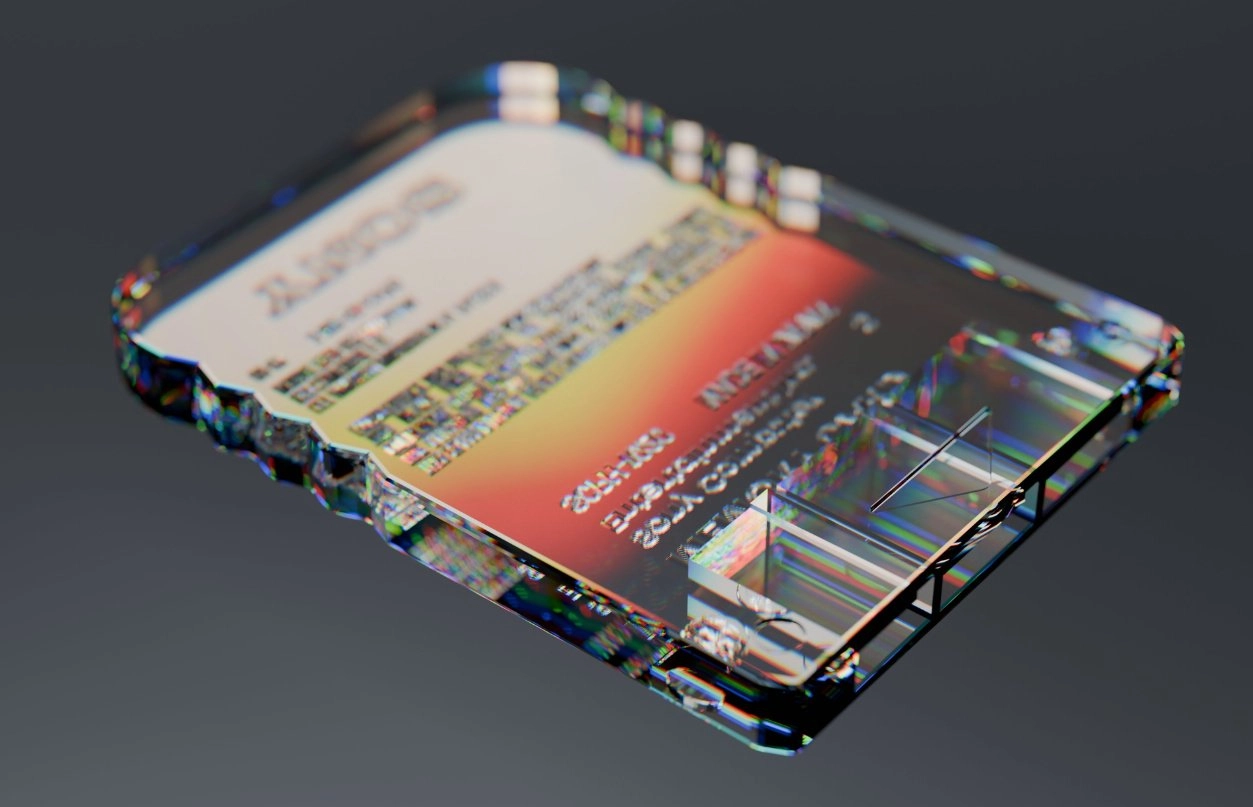
Memory cards have long been relegated to the realm of gaming nostalgia, eclipsed by modern-day storage solutions such as MicroSD cards and cloud saves. These convenient new methods allow gamers to access their saved data from anywhere, a significant leap from the bygone era when a stack of small, tangible cards was the key to preserving our digital adventures. Yet, the recent creation by Ryosuke Hana, a PlayStation Senior Design Technologist, has stirred up fond memories for those who used to rely on these plastic squares.
Ryosuke Hana paid homage to the PlayStation 1 (PS1) memory card using Blender, a 3D rendering software. His work so precisely emulates the look and feel of the classic gaming accessory that it led some to double-take, mistaking it for a tangible object made from exquisite glass. This level of craftsmanship showcases the artist's skill and the strong emotional connection that a simple piece of gaming hardware can evoke among players of a certain generation.
The memory card in question rose to prominence in the 1990s when the PS1 captured the hearts and thumbs of gamers around the world. Each card had a distinct, funky menu for managing game saves, an interface that has since become emblematic of the era. In a time when games were beginning to offer increasingly complex and lengthy experiences, these memory cards became invaluable, allowing players to save their progress, transfer data between consoles, and share their gaming achievements with friends.
Hana's digital tribute brings into sharp relief the tangible connection that past gamers had with their physical media. There's something intrinsically valuable about holding a device that contains countless hours of one's personal gaming history, which is what made the memory card more than just a utility; it was a personal gaming archive.
As we stand in an age where cloud storage services promise that our data will forever float in the ether, accessible from any device, the artwork raises discussions about the changing nature of game storage and its role in the gaming experience. The convenience of modern storage options cannot be overstated, but the physicality of old-school memory cards offered a different, more intimate kind of magic.
The memory card artwork by Hana isn't the only example of modern creators looking back fondly at gaming's past. The gaming community frequently sees the release of retro-inspired hardware and games. For instance, new peripherals that mimic the aesthetic and function of vintage gaming equipment, or fan-made games that harken back to simple, pixelated graphics and chip-tune music, keep the legacy of past gaming generations alive.
Moreover, the fascination with retro gaming extends beyond mere aesthetic preference; efforts to preserve video game history are becoming increasingly important. The digital nature of modern gaming poses unique challenges to preservationists. While a physical cartridge from the 1980s can still be popped into the appropriate console and played, digital-only releases are susceptible to being lost as technology advances and platforms shut down.
In this sense, Ryosuke Hana's tribute serves not only as a nod to the past but also as a reminder of the evolution of gaming and the importance of preserving our digital heritage. As gaming continues to advance with each console generation, the conversations sparked by Hana's art are crucial for ensuring that the games of today will be playable and remembered in the decades to come.
Ultimately, Hana's art stirs a longing among players for the simpler times of memory cards and the straightforwardness of physical media. While we may never again experience the thrill of buying a new memory card or the dread of losing one, thanks to artists like Hana, we can at least revisit those feelings through stunning visual tributes and keep the essence of gaming's history alive for both old and new generations to appreciate.

You must be logged in to post a comment!
