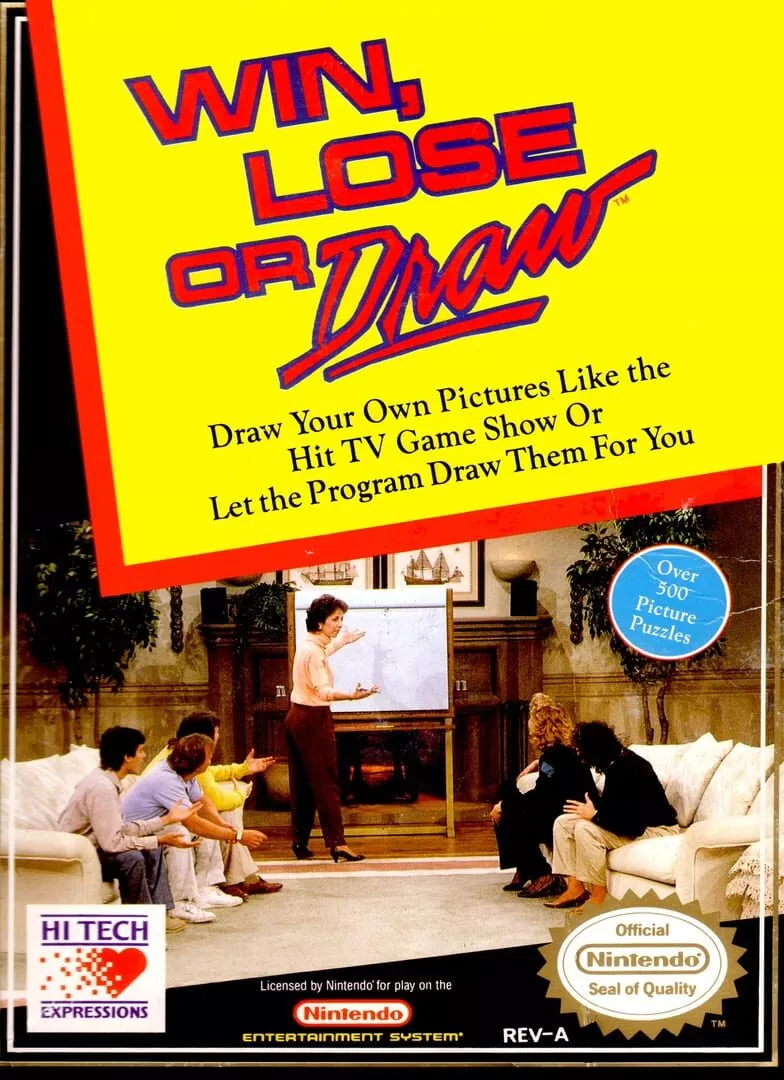
Win, Lose or Draw was not only a well-known TV show but also a popular NES game that captivated players with its unique gameplay. Combining artistic challenges with the need for lateral thinking, this game pushed players to decipher common expressions depicted in literal form. Drawing humorous pictures on a large game board, players were tasked with unraveling the hidden phrases. Let's explore the world of Win, Lose or Draw and dive into the creative and deductive challenges it provided.
As the name suggests, the primary objective of Win, Lose or Draw was to either win or lose by correctly or incorrectly identifying the drawings. Each team consisted of players taking turns, with one member from the team selected to be the artist in charge of drawing a phrase. The drawings were often comical and exaggerated, making them all the more entertaining to decipher.
The gameplay mechanics of Win, Lose or Draw on the NES were straightforward. The artist would stand in front of a gigantic screen and use the NES controller to control a small cursor. The cursor would be used to draw various elements of the chosen phrase. The other team members, acting as guessers, would observe the artist's drawing and shout out their guesses. The challenge lay in figuring out the often unconventional representations of common expressions.
The drawings in Win, Lose or Draw were cleverly designed to depict phrases and idioms using literal imagery. For example, if the phrase was "bright idea," the artist might draw a light bulb floating above a character's head. Similarly, "cabin fever" could be represented by a rickety cabin next to a person with a thermometer in their mouth. These literal representations added a layer of complexity to the guessing process, requiring players to think outside the box and connect the visual clues to form the correct phrase.
The NES version of Win, Lose or Draw brought all the excitement of the TV show directly into players' homes. It featured a wide range of categories, ensuring there was something for everyone. From movies and sports to everyday phrases, the game provided a diverse set of challenges that kept players engaged and coming back for more.
Aside from the standard gameplay, Win, Lose or Draw on NES also offered different modes to enhance the overall experience. Players could choose between Free Draw mode, where they could unleash their artistic creativity with no time constraints, or the Game Show mode, which replicated the fast-paced competition of the TV show. The inclusion of these modes allowed players to tailor their experience and enjoy the game in their preferred way.
Win, Lose or Draw on NES also featured a multiplayer option, allowing friends and family to join in on the artistic fun. This added a social element to the game, as players could gather around the screen, take turns being the artist, and engage in friendly competition to see who could correctly guess the most phrases. The multiplayer aspect brought the joy of collaborative problem-solving and laughter to the forefront, making it an ideal game for group gatherings.
The success of Win, Lose or Draw on NES can be attributed to its innovative gameplay and ability to bring the TV show's charm to a gaming console. It effectively combined artistic challenges with lateral thinking, creating an engaging experience for players of all ages. Its popularity paved the way for future games that incorporated similar drawing and guessing mechanics.
In conclusion, Win, Lose or Draw was not just a popular TV show; it was also a beloved NES game that challenged players' artistic skills and deductive abilities. With its literal depictions of common expressions, the game provided a unique and entertaining experience. Whether playing solo or with friends, Win, Lose or Draw on NES kept players engaged, laughing, and eagerly awaiting the next hilarious drawing.
