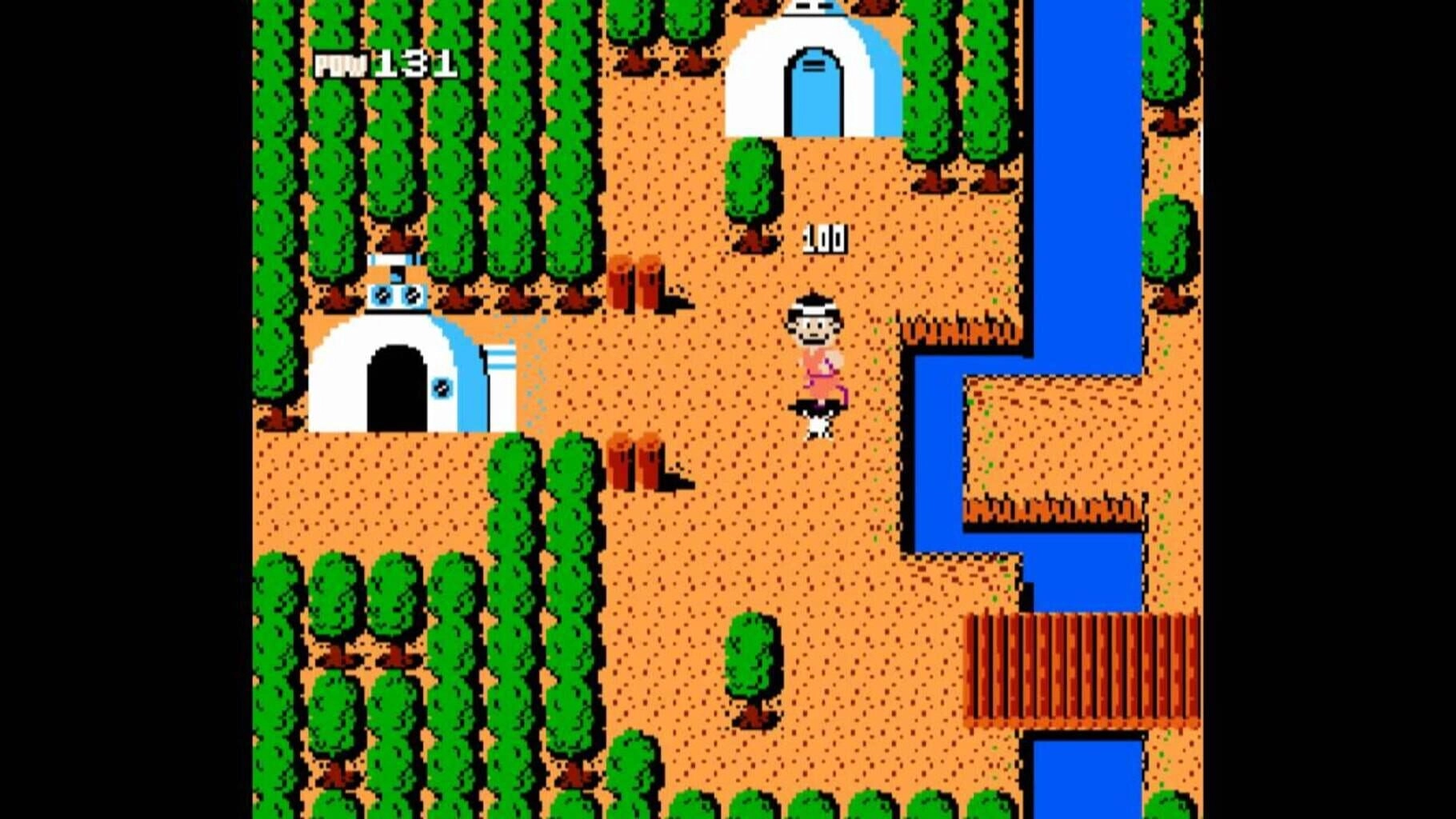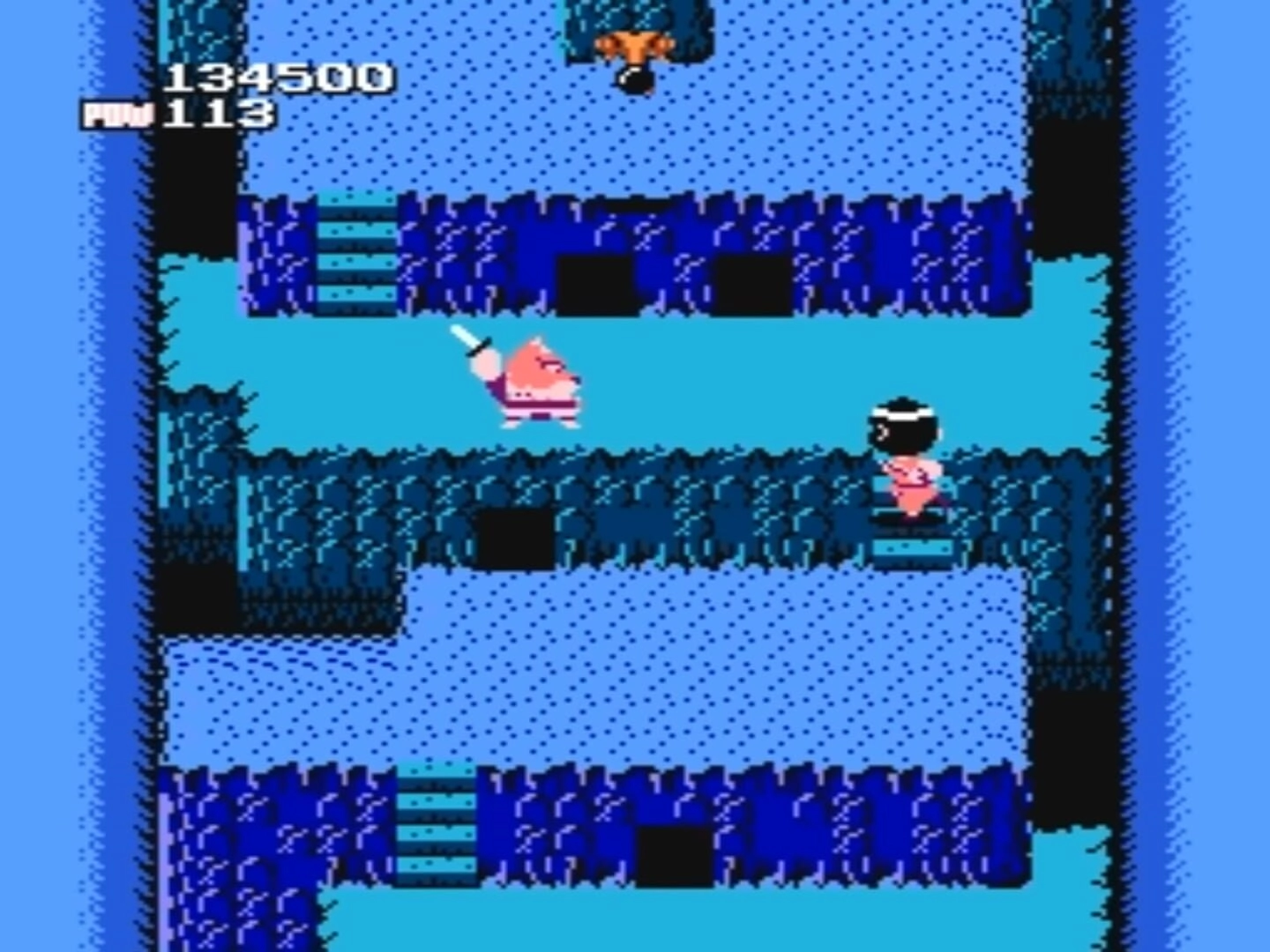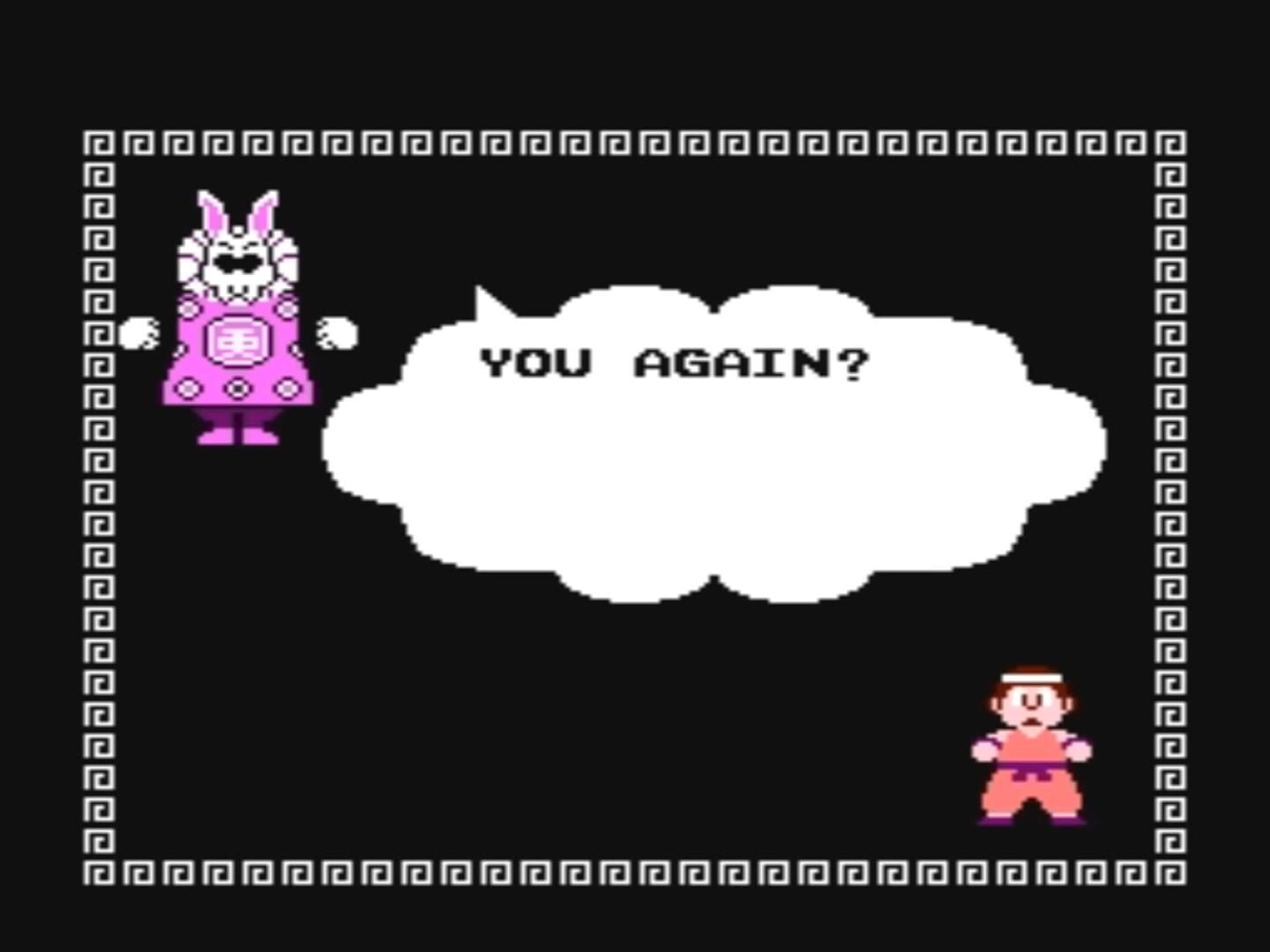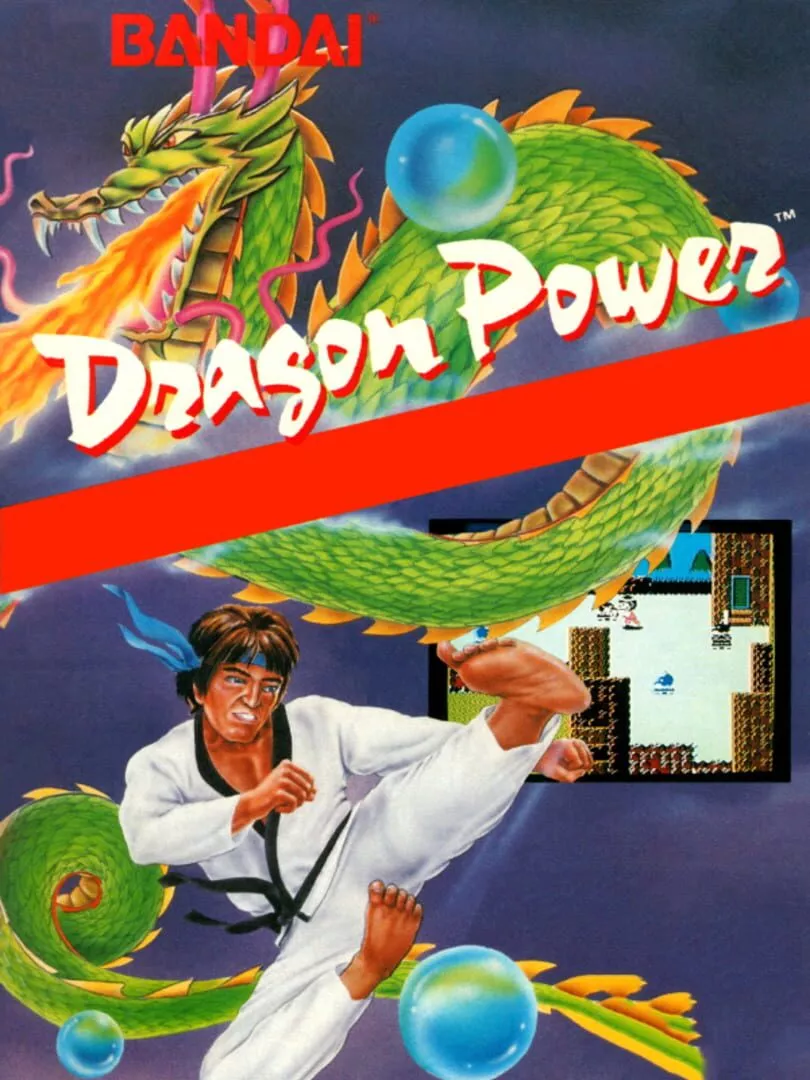
Dragon Power is an action-adventure game developed and published by Bandai for the Nintendo Entertainment System (NES) on March 3, 1988. Originally released in Japan as Dragon Ball: Shenron no Nazo, this heavily localized version has some notable differences. While European releases retain the Dragon Ball assets, the North American version removes most references to the franchise.
The game's story follows the first two volumes of the Dragon Ball manga. Players control the young monkey-tailed boy, Goku, and his teenage friend, Bulma (known as Nora in the North American version). Their goal is to find all seven Dragon Balls, also known as Crystal Balls in the North American release. It is believed that collecting these magical orbs grants the user any wish they desire.
Throughout their journey, Goku and Bulma encounter various characters, some of whom receive localized name changes. These include the turtle hermit Master Roshi (known as Hermit in the North American version), the shapeshifting anthropomorphic pig Oolong (Pudgy in the North American version), and the desert bandit Yamcha (Lancer in the North American version).
Compared to the original Japanese game, the North American version of Dragon Power has fewer stages. This alteration may have been made to accommodate the significant changes made during localization. Despite these changes, the core gameplay and mechanics remain intact.
In Dragon Power, players control Goku as he explores different areas, battles enemies, and collects items. The game features side-scrolling action sequences, where Goku can jump, punch, and use special attacks. These attacks consume stamina, which can be replenished by collecting food items found along the way.
As players progress through the game, they will face formidable bosses and navigate challenging platforming sections. Dragon Power offers a mix of action, adventure, and puzzle-solving, keeping players engaged and immersed in Goku and Bulma's quest to gather all the Dragon Balls.
The NES version of Dragon Power received mixed reviews upon its release. Some praised its solid gameplay mechanics and enjoyable action sequences. However, others criticized the lack of faithfulness to the Dragon Ball source material and the removal of essential elements from the original Japanese game.
Despite its mixed reception, Dragon Power holds a nostalgic place in the hearts of many NES fans. It remains an interesting entry in the Dragon Ball gaming franchise, showcasing the unique localization choices made during its North American release.
In conclusion, Dragon Power is an action-adventure NES game that offers a different experience for North American players compared to the original Japanese version. With its altered storyline and removed references to the Dragon Ball franchise, it is a noteworthy example of localized gaming content.