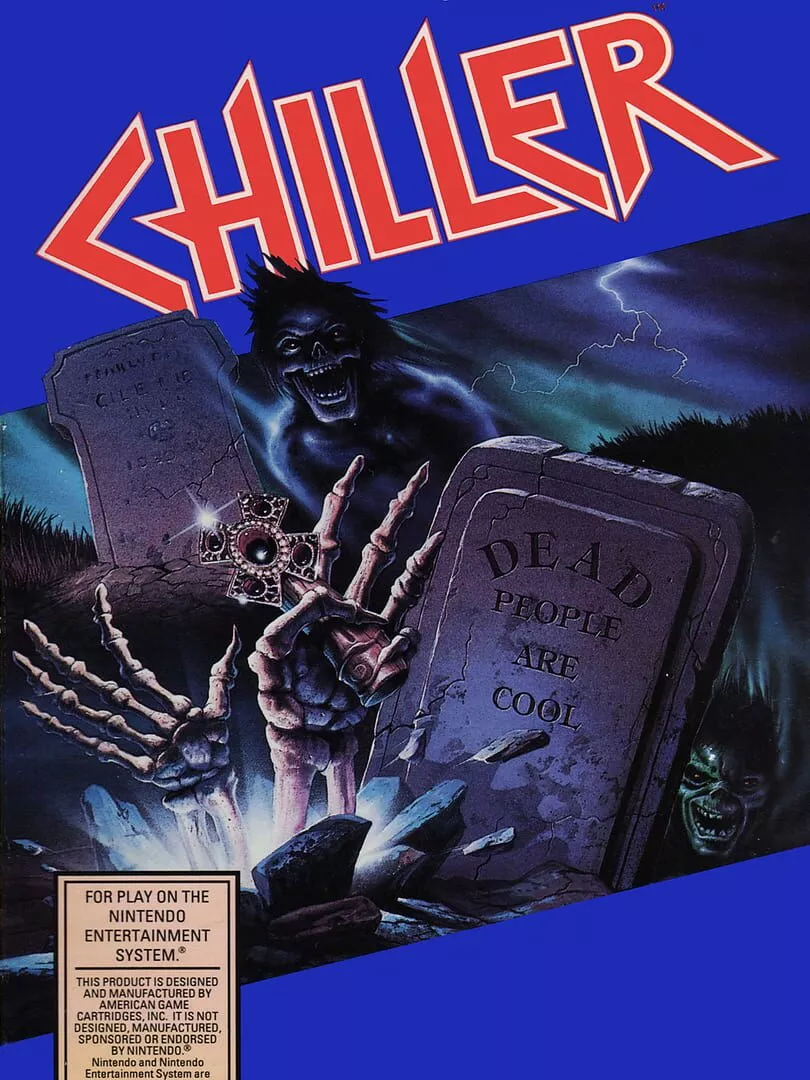
Chiller, developed by American Game Cartridges, is an unofficial game for the Nintendo Entertainment System (NES). Originally based on a notorious arcade shooter by Exidy, this game pushed the boundaries of violence in the 1980s video game medium. Despite being an unlicensed port, Chiller followed the lead of several official NES games by undergoing censorship, with some nudity covered up.
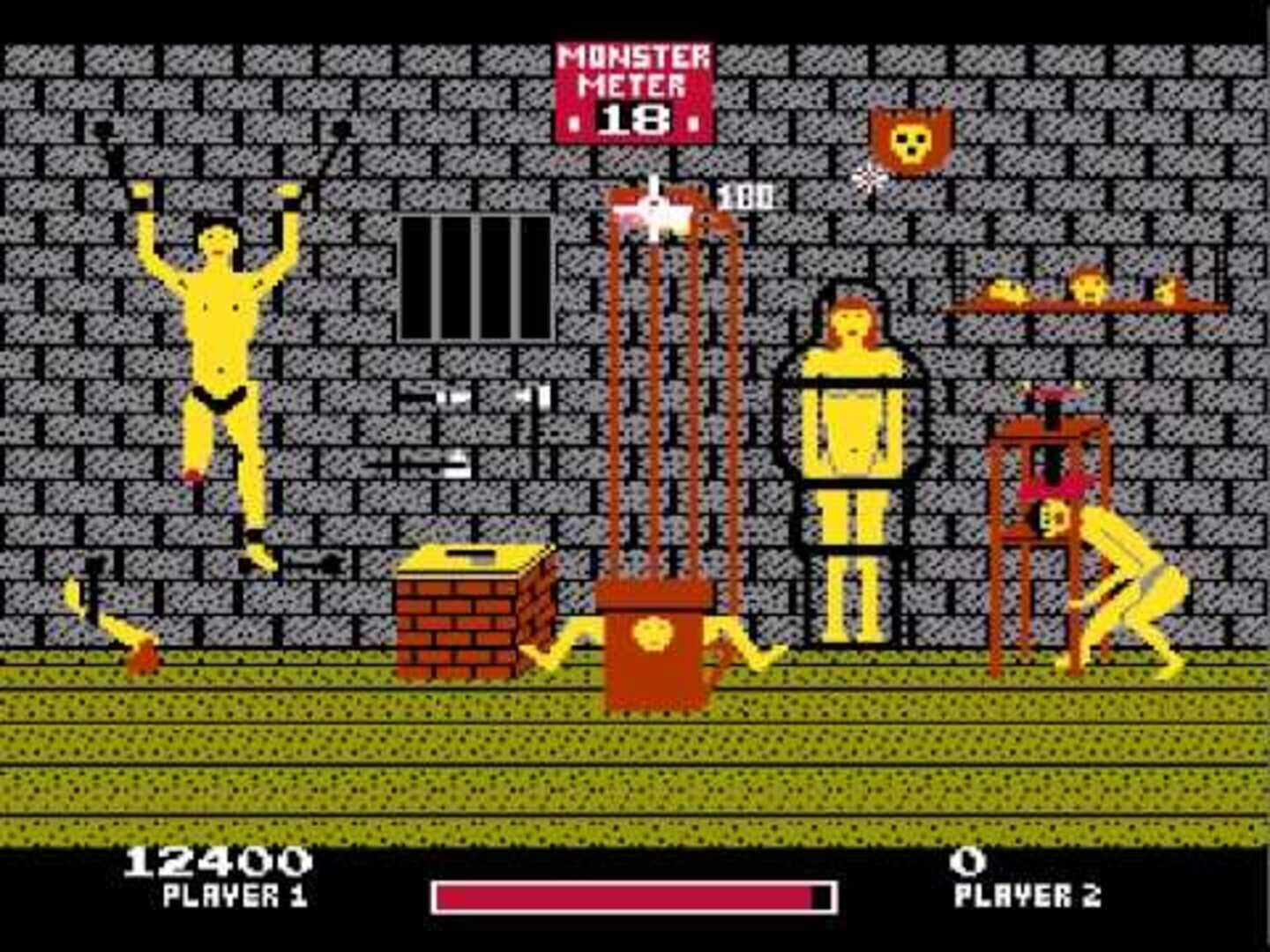
Set in various medieval settings, Chiller presents players with innocent people restrained in torture devices. The objective of the game is to kill every non-playable character (NPC) as quickly as possible, adding to its reputation as one of the most violent games ever made for the NES.
The game's graphics, while limited by the NES hardware, still managed to depict the brutal and gruesome scenes of the medieval torture devices. Each level showcased a different setup, with NPCs helplessly awaiting their fate. Players were encouraged to inflict as much harm as possible, with each successful kill adding to their score.
Chiller's control scheme was simple. Players used the NES controller to move the on-screen cursor, which acted as their targeting reticle. By pressing the A or B button, players would shoot at the NPCs, causing them to suffer gory deaths. The game also featured hidden bonus areas, which provided additional challenges and rewards for those who managed to find them.
Upon its release, Chiller faced significant controversy due to its extreme violence and explicit content. Many criticized its use of torture and the glorification of graphic violence. The game's unlicensed status further fueled the controversy, as it circumvented the standard approval process imposed by Nintendo and allowed it to bypass certain content restrictions.
Despite the controversy, Chiller gained a cult following among gamers who were drawn to its shock value. The game's notoriety led to underground distribution and bootleg copies being circulated among enthusiasts. Its limited availability, combined with its reputation for being one of the most violent games of its time, contributed to its appeal among collectors of rare and controversial video games.
In 1990, Chiller was released in Australia by Home Entertainment Suppliers, introducing the game to a wider audience. However, it was met with the same level of criticism and controversy that it faced in other regions.
Today, Chiller remains an intriguing piece of gaming history. Its existence as an unofficial port and its extreme violence make it a subject of both fascination and condemnation. The game serves as a reminder of the boundaries that were pushed and challenged within the video game industry, even in the early days of home consoles.
While Chiller's violent and disturbing content may not be suitable for all players, it serves as a testament to the evolving nature of the gaming medium. As technology advances and games become more immersive, it is essential to reflect on the past and understand how video games have evolved in terms of narrative, gameplay, and content regulations.
In conclusion, Chiller for the NES stands as a controversial and notorious game known for its extreme violence and graphic content. Despite its unlicensed status, the game gained a cult following and continues to be a curious piece of gaming history for collectors and enthusiasts alike.